
Indian benchmark indices Sensex and Nifty ended marginally lower in the special Diwali Muhurat trading session, snapping a seven-day rally amid profit-taking by investors. Despite a positive start, the Sensex dipped 28.62 points to 80,999.40, and the Nifty declined 43.95 points to 24,986.40.

After over a year of downturn, the domestic aviation sector showed a marked improvement last year with the number of passengers carried by Indian airlines growing by almost eight per cent over 2008.

Regional Indian airline FLY91 has placed a significant order for 40 new ATR 72-600 turboprop aircraft, valued at nearly USD 1 billion. This marks the single largest order for ATR planes by a regional carrier globally and is set to dramatically expand FLY91's network, connecting more unserved and underserved cities across India. Deliveries are scheduled from late 2027 to 2032, supporting the airline's goal of operating over 60 aircraft.

Indian companies, including NBFCs, filed proposals to raise $7.696 billion through external commercial borrowings (ECBs) and foreign currency convertible bonds (FCCBs) in July 2026, a significant increase from $6.09 billion in June.

Indian benchmark indices Sensex and Nifty closed lower, primarily due to declines in Reliance Industries and IT sector stocks, coupled with rising crude oil prices and investor caution ahead of the US Federal Reserve's policy decision.

Aviation stocks experienced a significant surge following the announcement of a two-week ceasefire between the US and Iran, which led to a sharp decline in crude oil prices. This development has positively impacted stock markets and the broader economic outlook for India.

Indian benchmark indices, Sensex and Nifty, experienced a sharp decline, with the Sensex tumbling 1,247.71 points and the Nifty settling below 23,100, primarily driven by a significant spike in crude oil prices and weak global market trends.

Indian benchmark indices, Sensex and Nifty, closed nearly flat on Thursday, influenced by the US Federal Reserve's interest rate hike and indications of further monetary tightening. Despite some intraday gains, caution prevailed, with foreign institutional investors continuing to offload equities. Meanwhile, the National Stock Exchange of India's (NSE) mega initial public offering opened for subscription, garnering 39 per cent subscription on its first day.
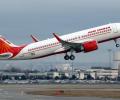
GE Aerospace is utilising artificial intelligence solutions, developed by its Bengaluru team, to significantly improve aircraft engine inspection, analytics, and maintenance. These innovations have reduced turnaround times by at least five days, enhancing engine durability, reliability, and time on wing, with specific tools like the AI-enabled Blade Inspection Tool cutting inspection times by 50%.

Indian benchmark equity indices, Sensex and Nifty, ended sharply lower, with the Sensex tumbling 876.37 points and the Nifty dropping below 22,900, primarily due to a decline in private bank stocks like HDFC Bank and Axis Bank, alongside weak global market trends.

'In the past, when the Indian markets have been flat for two years, the next year's returns have ranged between 5 per cent and 55 per cent.'

Indian benchmark indices, Sensex and Nifty, experienced a significant downturn, with Sensex tanking 778 points and Nifty closing at a five-month low, driven by surging crude oil prices, geopolitical tensions, and fears of further interest rate hikes by major central banks.

The aviation sector needs $30 billion worth of investment over the next 15 years to keep up with booming passenger and cargo traffic, Secretary Nasim Zaidi said on Friday.

Mumbai-based TCR Engineering Services has become the first independent company in India to receive Nadcap accreditation for materials testing at its Navi Mumbai and Vadodara laboratories, a crucial step for Indian suppliers to enter the global aerospace supply chain.

Indian benchmark indices Sensex and Nifty extended their rally for a second consecutive session, driven by a decline in Brent crude oil prices below USD 100 per barrel and strong buying in banking stocks and Reliance Industries.
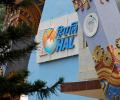
State-run Hindustan Aeronautics Limited (HAL) has delivered LCA Tejas FOC twin-seater trainers and HTT-40 basic trainer aircraft to the Indian Air Force, and Dhruv Next Generation helicopters to Pawan Hans. This significant handover, attended by Defence Minister Rajnath Singh and Civil Aviation Minister K Rammohan Naidu, underscores India's progress towards self-reliance in aerospace, strengthening both military and civil aviation capabilities with indigenous platforms.

'... but runs with the rigour and discipline of a large enterprise.'
Civil Aviation Minister K Rammohan Naidu announced that public sector oil marketing companies will implement a partial and staggered increase in jet fuel prices for domestic airlines, aiming to protect passengers from steep fare hikes.
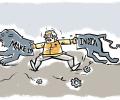
Hical Technologies and Safran Aerosystems have signed a Memorandum of Understanding to explore a joint venture for manufacturing complex systems, including fluid and fuel systems, for the Dassault Rafale program in India. This partnership aims to bolster the Make in India initiative, leveraging Hical's expanding manufacturing capabilities and Safran's technology leadership to produce critical aerospace components domestically and for global markets.

Jamco Interiors, a global supplier of aircraft cabin systems, has opened a Centre of Excellence (COE) in Pune. This strategic move aims to meet the increasing demand for advanced cabin interiors in India's rapidly growing commercial aviation market and leverage local engineering talent for global aerospace programmes.

India has advised its nationals in Saudi Arabia to 'remain calm and vigilant' due to an evolving security situation, including drone and missile attacks by Yemen's Iran-backed Houthi rebels, which recently resulted in the death of an Indian national and injuries to several others.

Indian benchmark indices, Sensex and Nifty, closed lower on Tuesday, with the Sensex declining 329.91 points to 74,529.08 and the Nifty dipping 85.30 points to 23,329, primarily dragged by underperformance in IT, financial, and capital goods stocks despite positive global market trends and easing crude oil prices.
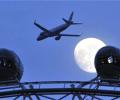
It is clear that foreign airlines have realised the growth possibilities of the Indian aviation sector and are keenly interested, the minister said.

The United Arab Emirates (UAE) has expressed intent to invest an additional $25 billion in India, with an ultimate goal of reaching $100 billion in investments, Union Minister Piyush Goyal announced. This comes as both nations plan to enhance cooperation in shipping, ports, energy, and emerging technologies, against a backdrop of expanding bilateral trade.
The Central Industrial Security Force (CISF) has signed an MoU with the Drone Federation of India (DFI) to enhance its counter-drone capabilities. This partnership aims to strengthen security at vital installations like airports, nuclear facilities, and oil refineries by fostering engagement with Indian drone startups and technology companies for capacity building, research, and operational readiness against aerial threats.
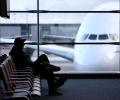
Civil Aviation Minister Kinjarapu Rammohan Naidu stated that no decision has been made regarding allowing Delhi and Mumbai airport operators to own and run airlines, as the government is carefully considering the implications of relaxing cross-ownership restrictions, including potential conflicts of interest and the need for more airlines.

Prime Minister Narendra Modi has outlined a comprehensive plan to empower India's youth, including training one crore youngsters in artificial intelligence skills and providing free online coaching for competitive examinations, aiming to position them at the forefront of the nation's journey to become a developed nation by 2047.

The sector requires proper implementation of policies, coupled with reasonable taxes and improved basic infrastructure.

Given all the risks in the world today, including the political instability, economic uncertainty, public health emergence and terrorism, there is not much buffer to absorb a significant change for the worse in the operating environment

Industry experts advocate for India to develop its own artificial intelligence (AI) safety framework, distinct from US or EU models, to address unique challenges like deepfakes and cyberattacks. They call for a comprehensive commitment involving all stakeholders and a hybrid regulatory approach combining voluntary and binding measures, as the Indian government also considers new AI regulations.

India is closely monitoring Sri Lanka's decision to offer foreign investors control of an airport near the China-controlled Hambantota port, as it could present a rare opening for Indian firms seeking strategic footholds in the Indian Ocean.

Amber Dubey explains why India needs to stop blocking competition if it ever wants to become the top aviation market.

National carrier Air India became part of the 27-member global airlines grouping Star Alliance, as budget airline AirAsia India launched operations and Tata-SIA joint venture carrier Vistara received the flying permit and announced its intentions to start operations from January 9.
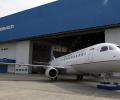
Adani Group and Brazilian aerospace firm Embraer have selected Dholera, Gujarat, as the location for a final assembly line for Embraer's regional jets. This strategic collaboration, formalised by an MoU in January, aims to boost India's Regional Transport Aircraft programme and align with the Aatmanirbhar Bharat initiative and UDAN scheme. Embraer sees immense potential in the Indian market across various aviation segments.

India and Russia have agreed to jointly produce a twin-engine narrow-body passenger aircraft for short-haul flights, marking a significant step in their strategic ties. Hindustan Aeronautics Ltd (HAL) and Russia's Public Joint Stock Company United Aircraft Corporation (PJSC-UAC) have signed an agreement for the production of SJ-100 aircraft in India.

Prime Minister Narendra Modi announced a new target of creating six crore 'Lakhpati Didis' to empower women and transform the rural economy. He highlighted the success of the existing initiative and the growing contribution of women in various sectors, from defence to technology.
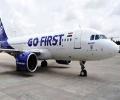
The inactivity of Go First may help other airlines in India's competitive market as it had a 7.8 per cent market share.
On the high costs facing the Indian airline industry, Goyal said the factors included a depreciating rupee against the dollar, escalating jet fuel prices, high taxes and rising infrastructure costs.
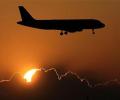
The Indian aviation market's recovery has been significantly impacted by caps on fare and capacity that has been placed by the government since May last year, said Willie Walsh, the director general of global airlines body IATA, on Tuesday. When India resumed the scheduled domestic flights on May 25 last year after a two-month break in view of COVID-19 lockdown, it had allowed the carriers to operate not more than 33 per cent of their pre-Covid domestic services. This capacity cap has been gradually increased and it now stands at 65 per cent.

'The way the government behaves, sometimes I ask myself: Are not Tamils Sri Lankans too? Why do you discriminate so much?'
